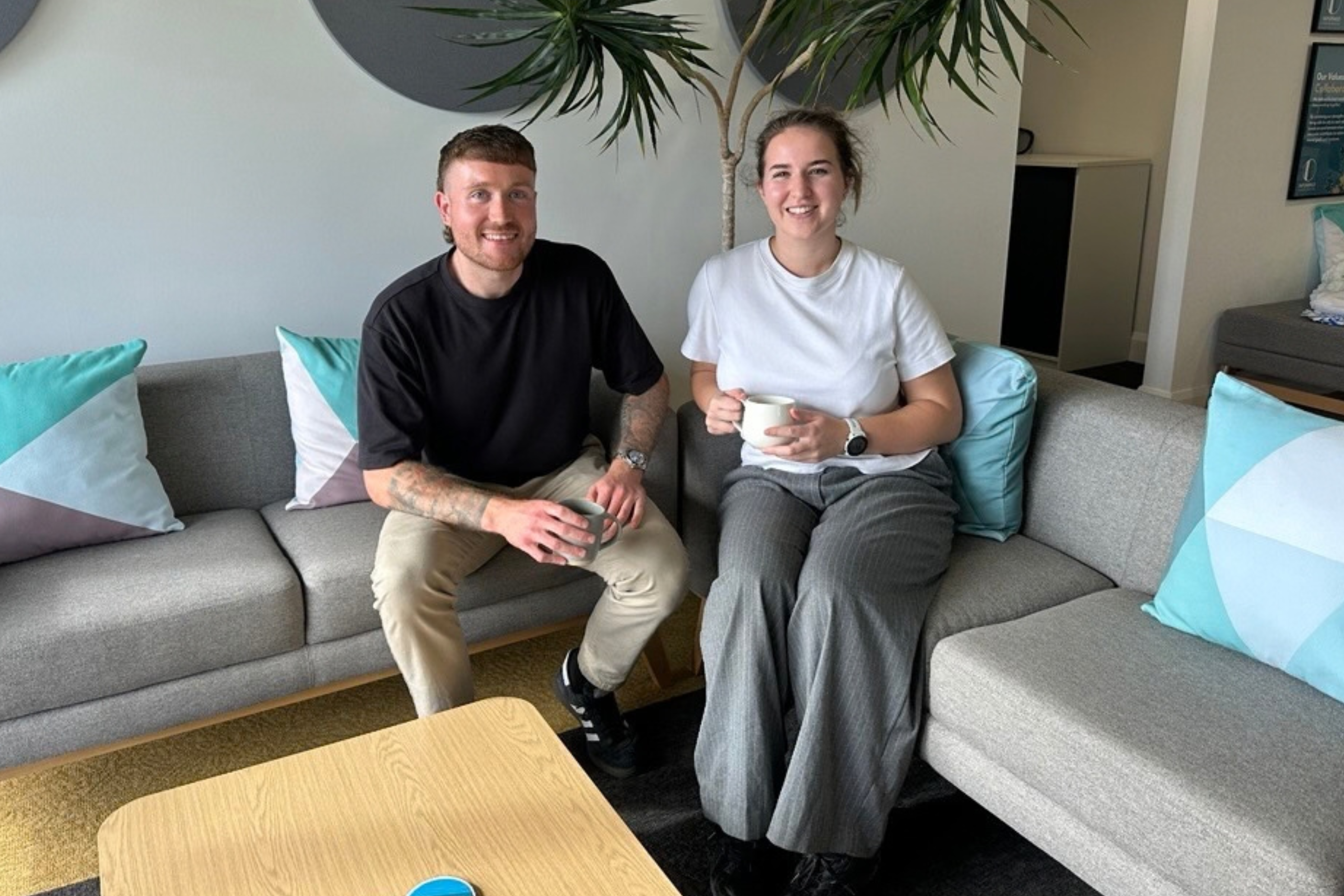

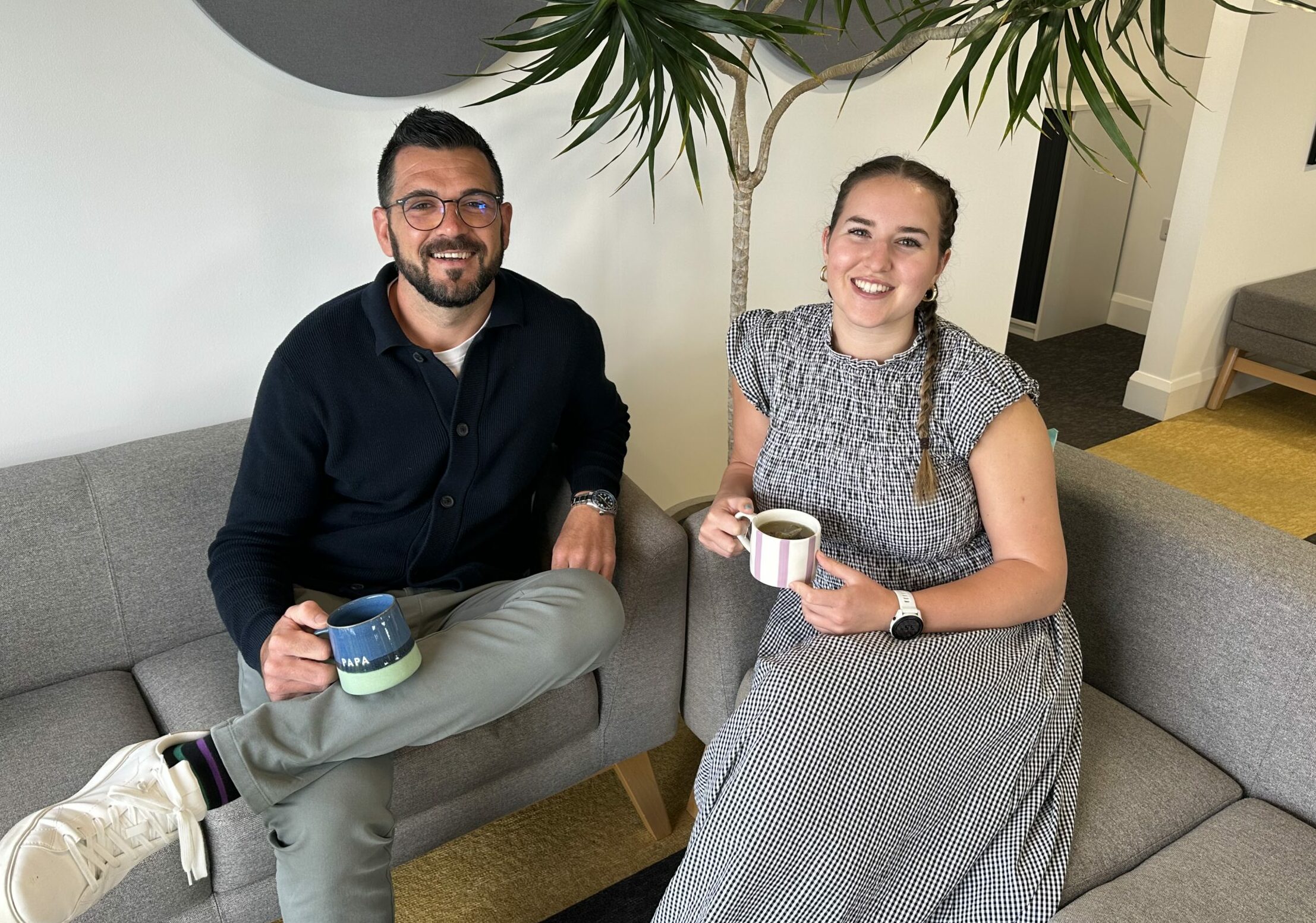
Welcome back to Inside IFP – the series where I sit down with members of our team over a coffee and chat about their career journey. This week, I caught up with Joe Sanders, one of our Chartered Financial Planners. Joe joined IFP fresh from university and has spent his career progressing through the business. Now, as an Executive Director, he shares some great insight and advice to anyone considering a career in financial planning.
Joe, you’re a Chartered Financial Planner and one of our Executive Directors; you’ve built quite a career for yourself! Did you always want to work in finance?
Did I know from the beginning I wanted to be a financial planner? No. I went to uni and did accountancy and financial management as my degree. So, numbers and business always interested me, and I thought I was going to go down the route of being an accountant.
By the end of my degree, I knew that wasn’t where I wanted to go, but being involved in finance and business was something that I was interested in. My dad of all people saw an advert in the Hull Daily Mail for IFP!
You started at IFP in 2011 as a Trainee Paraplanner, so I assume you sat all of your exams whilst working here. How did you find balancing a career and study?
I was straight out of uni, so I was in the rhythm of doing exams. We didn’t have kids at that point, so my only real commitment outside of work was rugby. In some ways that helped because we’d have a 5-hour bus trip and I was boring enough to revise on the way there!
It isn’t an absolute that you need to have done them before you start having family or whatever you want to go out and do. People can do them at any point, but for trainee roles, someone that is in the rhythm of doing exams could easily drop into it and start taking the exams and succeed at them. I just saw it as an extension to my degree for a few years.
Did you feel supported by IFP? Has the support changed over the years?
I felt supported in the sense it’s all being paid for, and everyone was wishing me to do well and helping. But I think we’re better at it now. You get people doing their final diploma exam or advanced papers, and it’s a shared sort of process of ‘here’s my case study, can anybody have a look?’. So, Josh, the Managing Director, is looking over somebody’s case study for their upcoming exam to give his thoughts and opinions. And I don’t know if that would happen in other places.
I think that’s a genuine point, I don’t feel there’s a hierarchy here. Everyone is willing to help everyone, regardless of position.
Yeah. Take Anj, Director of Compliance and she’s doing weekly workshops with the Client Services (CS) team. She’s got no reason to do that in terms of her own development, but she’s doing it to help the team.
How did you find the transition from Paraplanner to Financial Planner? I imagine because you’re so keen to chat to people, it was natural in some ways.
I was nervous. My entry into advising was a bit of a quick one.
I’d done all my exams, and at the time, there were three Paraplanners, including myself. It was sort of known amongst us that there could only be one of us to push forward to be an Adviser. I’m competitive, and I knew I wanted it, so I tried to do everything to get the opportunity.
Thankfully I did, and not long after I started as an Adviser, Kev, who was Managing Director at the time, had to step away from client work. I was handed Kev’s full client bank, which was a moment I’ll probably never forget!
They must’ve trusted you a lot. Did you just dive straight into being their Adviser?
I can’t remember how long I’d been in the role, but I wasn’t brand new to it. I went through a year-long process of client handovers, shadowing Kev. It was exciting but intimidating. The technical understanding was there, but the client conversation side was something that I had to learn. It took a little bit of getting used to.
I used to have a part-time job of working in the pub, and I think was really helpful in terms of trying to make conversation with new people, but it’s in a very different way to a professional role. So that took a bit of time to develop.
Do you feel that’s a skill that’s always developing? I imagine every client is so different that your presentation and conversation style is something that you constantly have to adapt.
Absolutely. There’s some clients that make your job easier, and they’re some of my most favourite clients because you can see them outside the office and you can share a laugh with them, and you can see them in a meeting room and it’s very similar.
On the other hand, there are some clients that perhaps are in a corporate environment, or are in a high-stress role, and I really struggled with people like that at first. I think because I wanted to perhaps overpromise and struggled to push back and challenge. So I had to work on that and try to understand what worked for me in those environments.
We have to complete different types of CPD to continue to improve, understand clients better, get more from them, and to be able to do our job better. It’s something that, for me, we should never stop trying to improve on.
I imagine your days vary a lot, so what does a typical week look like for you?
Away from director duties, it’s a combination of first and initial enquiry meetings with clients and then regular review meetings. We have more regular reviews with clients than we would new client meetings, because they’re the relationships that we want to keep and build.
On average, I have at least 2, probably no more than 5 regular review meetings with a client each week, which requires work to be done pre and post meeting. Before, so I’m as prepared as possible for that meeting to make sure that we can have a real accurate conversation. Afterwards the follow-up depends on what was revealed in the meeting. Initial meetings are fewer and further between, but they are more involved, and more interesting to begin with because you’re understanding someone brand new.
Business development is something that we have to do (and we want to do!). We’ve got good relationships with accountants, solicitors, and other professionals, so we will go and meet with those individuals/teams. We give regular presentations too, which I enjoy. We get to show off our technical knowledge and ability, but within that explain how we can help more individuals and hopefully set out to those people that some of their clients could use our help and it’s worth making an introduction.
And finally CPD. It’s not just something we have to do; it’s something we should be doing. I think certainly at IFP, we’re proud to say that we’re technically competent and we know our stuff. So, we need to make sure we’re doing what we can to keep on top of that.
Having a dedicated Paraplanner and CS must be helpful for all of the prep and follow up you have. Do you think the 1-1-1 structure benefits you as an Adviser and us as a firm?
I think it’s great for us, I genuinely do. It means clients have 3 dedicated touchpoints, not just one, which is great for the way we want to work and the service we want to deliver. I’ve just said what my week can look like, and some of that means I’m not always available. My clients have my paraplanner and my CS that they can go to if they’ve got any questions when I am elsewhere.
Our collaborative approach works great, too. Not just through the weekly meetings between Adviser, Paraplanner and CS, but through the open office. We’re doing well at creating a culture that allows collaboration, and that allows people to talk about the work and not just to blindly go into something that they’re not sure about, and that massively helps for my work with clients.
What do you like most about being a Financial Planner?
Working with people. It’s something I’ve really started to believe more as I’ve done it. We can never take for granted our responsibility of working with people’s money. It’s people’s life savings, it’s what they’ve worked hard to build, and that is a huge responsibility.
We’re genuinely helping people with things that they couldn’t do themselves, or don’t want to do themselves. For some, at the extreme, it is incredibly life-changing, and that’s really quite a powerful thing to be doing for people.
You mentioned your work being life changing. Are there any scenarios or client moments that stand out in your memory?
The best ones are perhaps the people who are financially unaware to begin with.
One client in particular springs to mind, who understandably had a busy life, working hard, then where they’d got the time to do so, enjoying what they’d built. But they had no idea in terms of a future plan. They’d always thought ‘we are going to have to work until state pension age’. We managed to show them that they could stop working 7 years earlier than they thought, and they couldn’t have been happier. They even invited me to their retirement party!
I’m sure it is a common story across financial services and Advisers, but that is one of those things that is mega to be able to do.
That’s amazing. You’ve just had your 10-year anniversary as a Chartered Financial Planner – congratulations! What was the process of becoming Chartered like? What is something people maybe underestimate about it?
I think it’s the exams. You don’t have to be a Chartered Financial Planner to become a Financial Adviser. You don’t have to be a Chartered Financial Planner to be a Paraplanner, but having done it – it has been so helpful in understanding technically more things. It helps with client discussions in so many different ways, where you can be confident in what you’re saying.
For those reasons it’s helpful, but what that entails is a fair chunk of exams. Because my degree was relevant, I didn’t have to do as many exams. I got 2 or 3 exemptions towards the Advanced Diploma, which is where you need it to be to be Chartered. But I have still done 19 financial services exams. I’m a Fellow of PFS, not just Chartered, so I’ve done a few more to get to there too.
But it should be that much work because it gives you a real wide look at all different parts of the industry. Not just investments, pensions and inheritance tax; you’ve got trusts in there, and mortgages if you want to do that, as well equity release and many other areas. It gives you a wider understanding so you can have relevant client discussions and that deeper understanding at an advanced level.
It isn’t an easy road. It’s going to take time and they’re going to require a bit of work and a bit of effort, but the benefit of that has been significant for me, in terms of understanding.
I suppose the pay rise for becoming Chartered is always a nice extra reason to do it too! What is your opinion of our pay structure for Advisers?
We have a pay structure that has a lot of benefits for someone ambitious. For a new Adviser, who is hungry and ready to get stuck in, there is effectively unlimited upside. There is pay away on all of the new business that you bring in, and the more that you add to your client bank, the greater the benefits too. The expectation isn’t that new leads will all be self-generated to begin with. We do get a flurry of referrals that they can work with, but they’re still going to be rewarded for that.
If a Paraplanner was considering becoming a Trainee Financial Planner, what advice would you give them?
I think paraplanners who enjoy the technical role and want to stay as career paraplanners is not a bad thing at all. But if someone sees something beyond that and has already built a good grounding and understanding of financial services, I think they’re in the perfect place to push forward. You’ve probably got more capabilities than you perhaps would give yourself credit for in terms of client conversations, because you’ve got that technical understanding. That’s what clients don’t have.
There’s a worry to begin with of ‘how am I going to conduct myself in the meeting?’, ‘how am I going to hold the conversation with the client?’. But if you know your stuff, you are going to have a client listen and want to know more from you. So if you want to have a role that is a people role rather than a fully technical role, then it’s something that you should jump into because you have done a lot of the hard work to put yourself in the best place to give it a go.
When you’re first starting out, do you think people skills matter just as much as technical knowledge?
A lot of people skills will be developed, harnessed and polished throughout your career, but I think you’ve got to have that sociable personality to begin with. I’m not saying an introvert can’t be a financial planner, but you need to be someone who can make conversation in a quiet room, someone who can hold a client and keep them engaged and focused, who can push, probe and challenge when they need to.
There are elements that people can learn, but some of it is innate, in terms of your personality. As I said, we can harness and improve those skills, but we can’t bring it out of somebody if it doesn’t exist.
Thank you Joe. You’ve given a fantastic insight into your career and what it is like to be a Chartered Financial Planner at IFP. To finish off the interview though, we have a few quick fire questions:
IFP in 3 words or less: Opportunity. Great team. Good place to be.
Tea or coffee? Coffee at work, tea at home in the morning.
Office or remote? Office.
Early start or late finish? Around the kids! But I’m not a morning person so if I had to pick, late finish.
Smart or casual? Casual.
We’re currently recruiting for a Trainee Financial Planner. If Joe’s story has resonated with you, or if you’d like to learn more about becoming a Financial Planner at IFP, head to our careers page.
See you next time for another coffee!