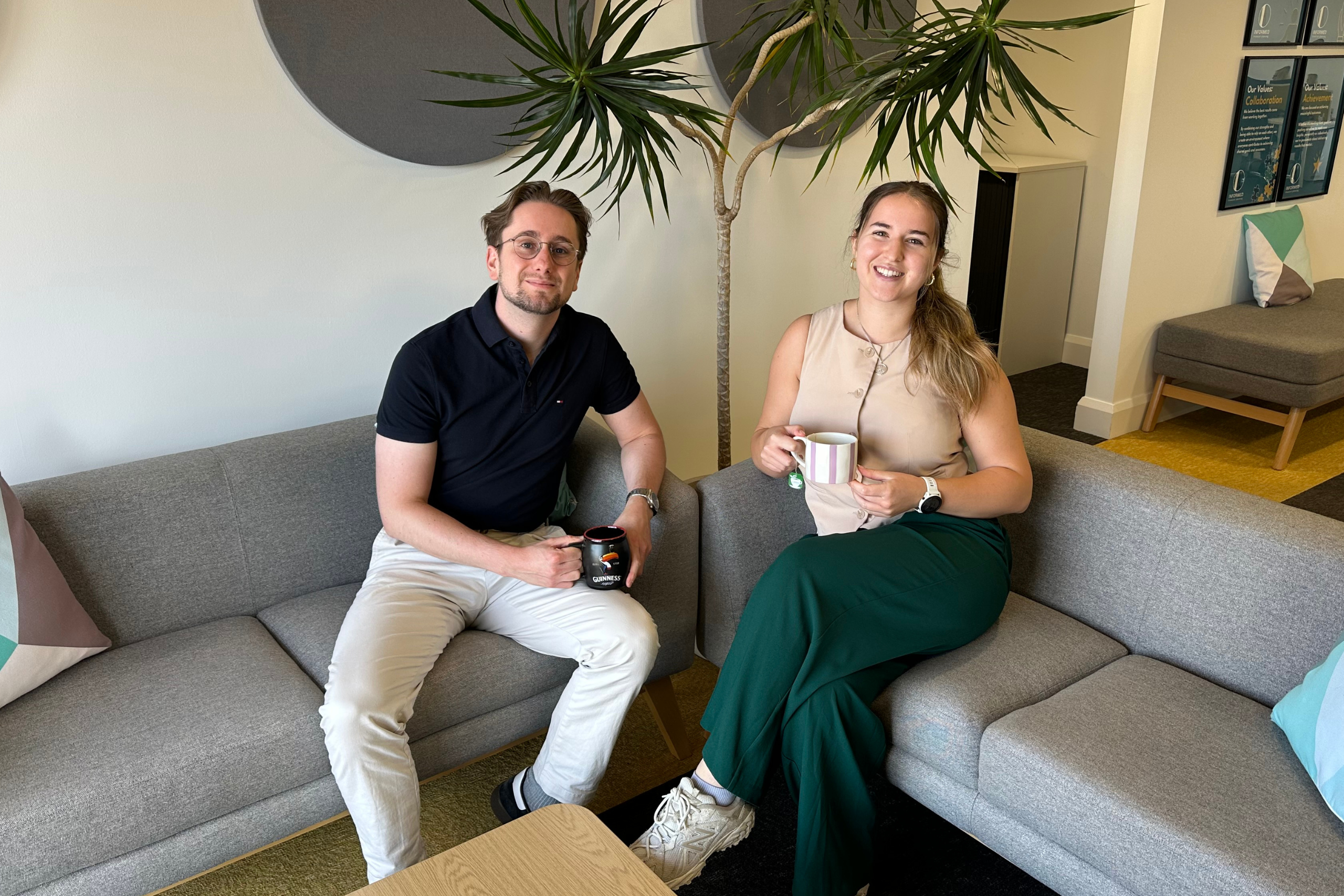


Welcome back to Inside IFP! The series where I sit down with our team to hear their stories, and give you a real feel for what it’s like to work here. This week, I sat down with Lauren S, one of our Junior Paraplanners. Lauren came to IFP during lockdown looking for a change and has spent the last 6 years progressing and growing with the company.
Lauren, how did you end up at IFP?
I was on furlough during covid from a job I found really stressful and wasn’t enjoying, so I decided to look elsewhere. I actually interviewed for a Client Services Administrator job, even though I didn’t like the idea of being customer facing; I just wanted something new. I had my first interview over teams, then I was invited into the office. I got called back the same day to be offered a role as an Ongoing Strategy Administrator.
Sounds like they saw something in you straight away! It’s great that they offered you a different role, were they even advertising for an Ongoing Strategy Administrator?
If they were, I never saw the advert because I probably would’ve applied for that instead. They already had one person in the role, so I’m not sure if they planned to hire someone else or if they made a vacancy for me.
You’ve progressed through a few different roles over the past 6 years, and you’re now a Junior Paraplanner. What does that look like day-to-day?
Lots of reports and research, but nothing is the same. Every day is different, so it’s hard to outline a specific day-to-day! It’s actually one of my favourite parts of my job – I get bored easily with repetitive work, so I like it because it’s always changing and different.
Are there any challenges that come with your role?
For me personally, sometimes it can be standing up for what I believe is the best thing to do for the client. For example, if I disagree with an Adviser, sometimes it can be challenging to back myself and stick to what I believe.
How do those conversations go? Do you feel heard in your reasonings when you disagree?
Yeah definitely! It becomes quite an open dialogue of justifying reasons, I’ll explain why I think X and then the Adviser will say these are my reasons for thinking Y. Often, we find a middle ground by understanding each other’s perspectives and usually there are points made by each side that the other person didn’t think of.
You’re currently sitting your exams to become a Paraplanner. How is that going?
Good, I’m half-way through my exams. I really struggled at first because I hadn’t done an exam since secondary school. At college and University, I chose coursework-based qualifications because I really didn’t like exams, so getting back into them was hard. But everyone was very supportive and created plans of the best ways to do them to try and make it as easy as possible for me.
Do you feel you’ve developed any other skills, too?
I think I’m a lot better at organising myself. I’m easily distracted and have a tendency to flit from one thing to another, but you can’t really do that. If you’re writing a report, you kind of have to stay in the report. But I do still flit from one section to another within the report, which is good. I’ve also learnt the importance of a to-do list!
Lauren T was giving all of her top tips on staying organised in her interview! Aside from the previous answers, is there anything you’re proud of achieving whilst working at IFP?
I’m proud of the confidence I’ve developed. When I first started, a lot of the time I would ask ‘can I learn something new?’, which I never would’ve asked people before. Then actually being able to learn a new skill and be trusted with the task is very rewarding.
What other opportunities have you had here that you don’t think you would’ve experienced elsewhere?
I’m a part of our wellbeing team and I’m a mental health first aider. I don’t think anywhere I’ve previously worked have either of those things, and I know none of my friends’ workplaces do.
Is there anything about IFP that you never expected when you joined the team?
I honestly expected the Financial Planners to be more uptight. I would never have expected the Managing Director to come in and be like “I have a space fact for you”, then spend 10 minutes telling me facts about space! I think everyone is a lot more relaxed and fun than you’d expect.
When I think about finance, I would think of people just sitting in suits, not talking and just doing their job, then leaving. I didn’t expect people to be friends and spend time outside of work together, but that’s what it’s like here.
What is it like being a part of the Paraplanning team?
Me and Lauren T have been here for a long time together, so we’ve developed a good friendship over the years. But I think the good thing about it is that when new people come in, it doesn’t really feel like they’re new because they just fit in well. Nobody is on the outskirts, everyone joins in with conversations and if anyone has any questions, everyone gets involved with helping each other out. Nobody expects you to just figure stuff out, it’s very collaborative.
You’ve mentioned friendships and teamwork – does that extend outside of work too? Do you feel supported in your personal life?
Yeah. I have quite a lot of doctor appointments because I’m epileptic. A few years ago, I was scheduled to have surgery, but we didn’t know when it would be. I remember the doctors called me midweek and asked if I could go in for my pre-op that Friday, ready for my operation the week after. I went to Anj, who was my manager at the time, and I was concerned that it was only a week’s notice, but she was so supportive that I was going to have it done, and there was never any pressure or guilt about it being short notice.
Anj constantly checked in with me throughout my recovery. I kept trying to come back to work, but they kept telling me no until I was actually ready and recovered. Stuff like that helps massively with feeling supported, it’s nice to not feel any guilt over things you can’t control outside of work.
Do you have any advice for someone who might be considering applying for a role at IFP?
Don’t have the expectation of a ‘typical’ finance office; don’t expect it to be boring and stuffy. And don’t worry if you feel like you don’t know enough. The training and support you get is continuous and you’re not going to be taught how to do something and then just left.
What kind of person do you think thrives here?
I think everyone is different and that’s why we work well. Everybody can thrive here.
Thank you Lauren, I love these interviews because I feel like I learn stuff about you that I wouldn’t necessarily know from everyday conversations. But before we finish up, I need to ask you my quick-fire questions:
Describe IFP in 3 words or less.
Supportive & social
Tea or coffee?
Coffee.
Office or remote?
Office.
Early start or late finish?
Early.
Quick or long lunch?
Quick.
And finally, smart or casual style?
Casual.
I really enjoyed that coffee and chat, and I hope you did too. Lauren’s story really shows the level of support you can expect at IFP – not just in your role, but outside of work too. If Lauren’s story has got you thinking, it’s definitely worth taking a look at our current opportunities.
Stay tuned for the next interview in two weeks’ time.